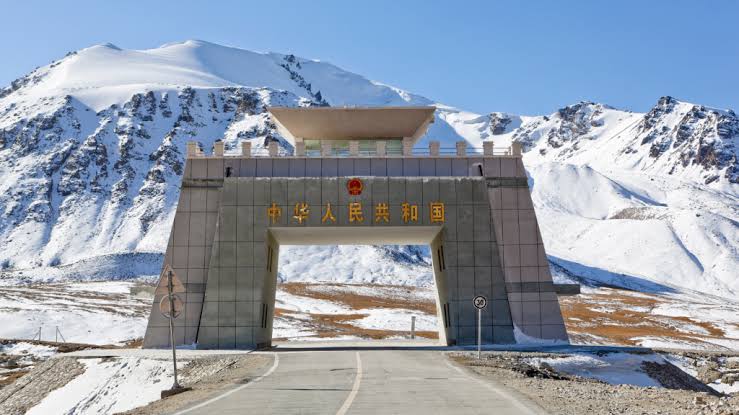
Khunjerab Pass Pakistan: Complete Travel Guide to the Pakistan-China Border, Hunza & Khunjerab National Park 2026
There are road trips, and then there is the road to Khunjerab Pass.
Imagine leaving the green villages of Hunza Valley behind and following the legendary Karakoram Highway north. Turquoise water flashes beside the road at Attabad Lake. The sharp peaks of Passu rise ahead like stone cathedrals. Small villages become fewer, trees slowly disappear, and the landscape opens into a vast world of mountains, rivers and high-altitude wilderness.
Then, after passing through Khunjerab National Park, you arrive at one of Pakistan’s most extraordinary frontiers: Khunjerab Pass and the Pakistan-China border.
At approximately 4,693 meters (15,397 feet) above sea level, Khunjerab Pass is one of the highest paved international border crossings in the world and the highest point on the famous Karakoram Highway.
But Khunjerab is more than a border.
It is a journey through the history of the Silk Road, the landscapes of the Karakoram, the wildlife habitat of Khunjerab National Park and the culturally rich communities of Hunza and Upper Hunza.
For international travelers planning to visit Pakistan in 2026, 2027, 2028, 2029 or 2030, a journey from Hunza to Khunjerab Pass deserves a place on the itinerary.
This complete Khunjerab Pass travel guide explains where Khunjerab is, how to reach it, the best time to visit, Khunjerab National Park fees, weather, altitude, distances, nearby attractions and essential travel tips.
Where Is Khunjerab Pass?
Khunjerab Pass is located in the northern part of Hunza District, Gilgit-Baltistan, Pakistan, along the border between Pakistan and China.
The pass connects Pakistan’s Gilgit-Baltistan region with China’s Xinjiang region through the Karakoram Highway, one of the world’s most spectacular mountain roads.
The official Gilgit-Baltistan tourism portal describes Khunjerab Pass as the “Gateway to China” and places its elevation at approximately 4,693 meters or 15,397 feet.
For travelers coming from Pakistan, the journey generally follows:
Islamabad → Gilgit → Hunza → Attabad Lake → Gulmit → Passu → Sost → Khunjerab National Park → Khunjerab Pass
This route alone explains why visiting Khunjerab is not simply about seeing a border gate.
The entire journey is an attraction.
Why Is Khunjerab Pass Famous?
Khunjerab Pass has become one of the most famous tourist destinations in northern Pakistan for several reasons.
First, it is located at an extraordinary altitude.
At around 4,693 meters, visitors stand in a landscape where the air is noticeably thinner, trees have disappeared and enormous mountains dominate the horizon.
Second, Khunjerab marks the famous Pakistan-China border along the Karakoram Highway.
Third, the journey passes through Khunjerab National Park, a protected high-altitude environment known for rare mountain wildlife.
Finally, the route connects several of Pakistan’s most photographed tourist attractions, including:
Attabad Lake
Passu Cones
Hussaini Suspension Bridge
Borith Lake
Upper Hunza
Sost
Khunjerab National Park
This makes a Hunza to Khunjerab Pass road trip one of the most rewarding travel experiences in Pakistan.
The Journey Is More Beautiful Than the Destination
Many travelers arrive in Hunza thinking that Khunjerab Pass itself will be the main attraction.
But something interesting happens along the way.
The road becomes the experience.
You leave Karimabad surrounded by villages, orchards and enormous mountains before traveling beside the extraordinary blue waters of Attabad Lake.
Soon, the dramatic Passu Cones appear.
Continue north and the villages become smaller.
You pass through Upper Hunza toward Sost, the final major settlement before the high mountains of Khunjerab.
Beyond Sost, the environment changes dramatically.
The road climbs into Khunjerab National Park.
Buildings disappear.
The landscape becomes wider, colder and increasingly remote.
Streams wind through valleys surrounded by barren mountains. Marmots may appear beside the road. If you are fortunate, you might see Himalayan ibex on distant slopes.
Eventually, the road rises toward a vast high-altitude plateau.
And there, surrounded by the Karakoram, stands the Pakistan-China border.
This gradual transformation is what makes the Khunjerab Pass tour from Hunza unforgettable.
Khunjerab National Park: Wildlife at the Roof of Pakistan
Before reaching Khunjerab Pass, travelers enter Khunjerab National Park.
The park was established in 1975 and covers approximately 226,913 hectares, according to the Gilgit-Baltistan Forest, Wildlife & Environment Department. One of its primary conservation purposes was the protection of the endangered Marco Polo sheep, and the park is also known as important snow leopard habitat.
The landscape is dramatically different from the lower valleys of Hunza.
At these elevations, visitors encounter an ecosystem shaped by extreme cold, strong winds, short summers and long winters.
Wildlife associated with the wider region includes:
-
Marco Polo sheep
-
Himalayan ibex
-
Snow leopard
-
Marmots
-
Blue sheep
-
Tibetan wolf
-
High-altitude birds
However, visitors should keep realistic expectations.
You are much more likely to see marmots than a snow leopard.
Snow leopards are elusive wild animals, and sightings on an ordinary sightseeing trip should never be expected or guaranteed.
The real attraction is experiencing one of Pakistan’s most extraordinary protected mountain environments.
Khunjerab National Park Fee: What Tourists Should Know
One of the most searched questions online is:
What is the Khunjerab National Park entry fee?
Unfortunately, this is also one of the most confusing questions.
Different travel websites, older blogs and traveler reports quote significantly different fees.
You may find online references mentioning:
Rs. 500
Rs. 800
Rs. 1,500
USD 8
USD 30
USD 40
and other amounts.
Why so many different figures?
Fees can differ according to nationality, visitor category, year, travel circumstances and official revisions. Some online articles also continue displaying outdated prices long after regulations change.
For this reason, travelers should not treat an old Google result as a guaranteed current Khunjerab National Park fee.
Khunjerab National Park Fee for Foreigners
Foreign tourists have historically been charged differently from Pakistani visitors.
Because published figures vary substantially, international travelers should confirm the latest applicable fee shortly before traveling.
Khunjerab National Park Fee for Pakistani Tourists
Pakistani visitor rates have generally been lower than foreign tourist rates, but these may also change.
Important Tip
Carry sufficient cash in Pakistani rupees when traveling toward Khunjerab.
Do not rely completely on card payments or remote ATMs.
If you book an organized Khunjerab Pass tour with Adventure Touristik, ask for the latest known park fee when confirming your trip.
Is Khunjerab Pass Open Today?
Another extremely common Google search is:
“Is Khunjerab Pass open today?”
The answer requires an important distinction.
There is a difference between:
tourist road access to the Khunjerab Pass area
and
international immigration/border-crossing operations between Pakistan and China.
These are not necessarily the same thing.
Recent developments have expanded year-round cross-border connectivity between Pakistan and China, while actual tourist access to the high pass can still be affected by snow, weather, road conditions and administrative decisions. A May 2026 travel update reported the pass open for tourists at that time, while noting snowy conditions beyond Sost.
Therefore, if you are traveling tomorrow or next week, always check current conditions locally.
Never plan a Khunjerab journey based only on an old blog saying:
“Open May to October”
or
“Closed November to April.”
Conditions and policies evolve.
Best Time to Visit Khunjerab Pass
For most sightseeing tourists, the most comfortable period for a Khunjerab Pass tour is generally from late spring through autumn, subject to weather and road conditions.
May to June
This is a beautiful period to explore Hunza and Upper Hunza.
Mountain peaks remain heavily snow-covered, while valleys at lower elevations become greener.
Khunjerab itself can still be extremely cold.
July to August
Summer is one of the busiest tourism periods in Gilgit-Baltistan.
Road access is generally more convenient, but domestic tourism can increase considerably during holidays.
If you prefer quieter travel, avoid major public holiday periods.
September to October
For photographers, this may be one of the most rewarding times to combine Hunza Valley and Khunjerab Pass.
Autumn colors transform Hunza’s villages into shades of gold, yellow, orange and red.
Higher elevations remain dramatically colder.
Winter
Winter creates spectacular snow-covered scenery, but it also brings additional challenges.
Heavy snowfall, ice, extreme temperatures and changing road conditions can affect tourist access.
Travelers planning a winter Khunjerab journey should use experienced local transport and confirm current conditions immediately before departure.
Khunjerab Pass Weather: Never Underestimate the Cold
One of the biggest mistakes travelers make is assuming:
“It is summer, so I don’t need winter clothes.”
That can be a very uncomfortable mistake at Khunjerab.
At approximately 4,693 meters, Khunjerab Pass weather can change rapidly.
A sunny morning in Karimabad does not mean warm weather at the Pakistan-China border.
You may encounter:
Strong winds
Cold temperatures
Cloud
Rain
Snow
Rapid weather changes
Even during warmer months, carry:
A warm jacket
Thermal or layered clothing
Windproof outerwear
Gloves
Warm hat
Comfortable closed shoes
Sunglasses
Sunscreen
Do not travel to Khunjerab in flip-flops and light summer clothing simply because Hunza felt warm in the morning.
The climate at nearly 4,700 meters is completely different.
Khunjerab Pass Temperature
People frequently search for Khunjerab Pass temperature today, but temperature alone does not tell the full story.
Wind can make conditions feel considerably colder.
Cloud cover can arrive quickly.
Sunshine at high altitude can also be intense.
Instead of preparing for one predicted number, prepare for several conditions in the same day.
Layering is the best strategy.
You can remove layers when warm and add them as you climb toward the pass.
Altitude Sickness at Khunjerab Pass
Khunjerab Pass is not an ordinary sightseeing viewpoint.
At approximately 4,693 meters, the oxygen available to your body is substantially lower than at sea level.
Some visitors may experience symptoms associated with high altitude, including:
Headache
Dizziness
Nausea
Shortness of breath
Fatigue
Weakness
Travelers should ideally spend time acclimatizing in Hunza or Upper Hunza before visiting the pass.
When you arrive:
Walk slowly.
Avoid running.
Avoid unnecessary strenuous activity.
Drink sufficient water.
Listen to your body.
If you begin feeling seriously unwell, tell your guide or driver immediately.
Descending to a lower elevation may become necessary if symptoms worsen.
Travelers with relevant medical conditions should seek professional medical advice before high-altitude travel.
How Long Should You Stay at Khunjerab Pass?
It can be tempting to spend hours taking photographs at the border.
However, because of the extreme altitude, visitors should generally avoid staying unnecessarily long if they are not properly acclimatized.
For many tourists, a relatively short visit is enough to:
See the border area
Take photographs
Enjoy the mountain scenery
Visit the famous ATM area if accessible
Experience the high-altitude landscape
Then begin descending.
Remember:
Your journey through Khunjerab National Park is part of the experience.
You do not need to spend hours at the highest point to enjoy the trip.
How to Reach Khunjerab Pass from Hunza
The most popular route begins in central Hunza or Upper Hunza.
A typical journey follows:
Karimabad → Attabad Lake → Gulmit → Hussaini → Passu → Sost → Khunjerab National Park → Khunjerab Pass
For travelers staying in Karimabad, the excursion can become a long full-day journey.
A better option for travelers with more time is to stay one or two nights in Gulmit or Passu.
This allows you to explore Upper Hunza separately before continuing toward Khunjerab.
Islamabad to Khunjerab Pass
If you are traveling from Islamabad, do not think of Khunjerab as a simple direct drive.
The journey should be broken into several stages.
A comfortable itinerary might include:
Day 1: Islamabad to Gilgit/Hunza
Day 2: Explore Karimabad
Day 3: Attabad Lake and Upper Hunza
Day 4: Khunjerab Pass
Day 5: Return or continue exploring
A 5–10 day Khunjerab Pass tour package gives travelers much more time to appreciate the region instead of spending the entire holiday inside a vehicle.
Islamabad to Khunjerab Pass Distance
Travelers searching for Islamabad to Khunjerab Pass distance will commonly find estimates around 850–900 kilometers depending on the route and exact reference points.
However, kilometers can be misleading in Pakistan’s mountains.
Weather, landslides, construction, traffic and road conditions can dramatically affect travel time.
Never build a northern Pakistan itinerary based only on Google Maps driving estimates.
Add flexibility.
The mountains decide the schedule more often than the clock.
Hunza to China Border Distance
The phrase Hunza to China border distance is slightly misleading because Hunza is a large region.
Your journey will differ depending on whether you start from:
Karimabad
Aliabad
Gulmit
Passu
Sost
Travelers staying in Upper Hunza are already significantly closer to Khunjerab.
This is why Passu or Gulmit can be excellent bases for a relaxed Khunjerab itinerary.
Sost to Khunjerab Pass
Sost is the last major Pakistani settlement before Khunjerab National Park and the border.
The road journey from Sost to Khunjerab Pass is approximately 80–85 kilometers depending on the exact points measured.
Sost is an important commercial and transport center because of Pakistan-China trade.
Before continuing north, travelers should make sure they have:
Enough fuel
Drinking water
Snacks
Warm clothes
Cash
Essential medicines
Facilities become increasingly limited after Sost.
What Is Sost Famous For?
Sost—or Sust—is closely associated with Pakistan-China trade and travel.
It serves as an important customs, immigration and logistics point on the Pakistani side of the Karakoram Highway.
For ordinary tourists visiting Khunjerab without crossing into China, Sost is usually a transit stop.
For international overland travelers crossing between Pakistan and China, however, it becomes much more important because border formalities are handled through designated facilities and procedures rather than simply at the famous tourist gate.
Can You Cross From Pakistan to China at Khunjerab Pass?
Yes, international movement between Pakistan and China takes place through the Khunjerab route—but you cannot simply walk up to the tourist border gate and enter China.
International crossing involves:
Valid passports
Required visas
Immigration
Customs
Approved transport arrangements
Current border procedures
A June 2026 overland travel report describes immigration formalities beginning in Sost on the Pakistani side before travelers continue toward the international crossing.
Rules can change.
Anyone planning to travel Pakistan to China via Khunjerab Pass should verify current requirements shortly before departure.
A normal sightseeing tour to Khunjerab does not automatically give you permission to cross into China.
Do You Need a Chinese Visa to Visit Khunjerab Pass?
If you are only visiting the legally accessible Pakistani side of Khunjerab Pass as a tourist and returning to Hunza, you do not need a Chinese visa simply because you can see China across the border.
If you intend to enter China, appropriate Chinese immigration authorization is required according to the rules applicable to your nationality and travel circumstances.
Foreign travelers must, of course, also hold valid permission to enter and stay in Pakistan.
Always check current visa requirements through official government channels.
The Karakoram Highway: The Road That Makes Khunjerab Possible
No Khunjerab travel guide is complete without talking about the Karakoram Highway.
The KKH is one of the most remarkable mountain roads in the world.
It connects Pakistan with China through some of the highest and most dramatic terrain on Earth.
Traveling the highway gives visitors a front-row view of:
The Karakoram Mountains
The Hunza River
Glaciers
Ancient settlements
High-altitude valleys
Pakistan-China trade routes
Khunjerab Pass is the highest point on this extraordinary road.
For road-trip lovers, photographers and adventure travelers, the Karakoram Highway itself can be a reason to visit Pakistan.
Attabad Lake: The Turquoise Gateway to Upper Hunza
Most journeys to Khunjerab pass Attabad Lake.
The lake was formed after a massive landslide in 2010 blocked the Hunza River.
Today, its extraordinary turquoise water has made it one of Pakistan’s most photographed destinations.
Visitors can enjoy:
Boating
Photography
Mountain views
Lakeside restaurants and cafés
Water activities where available
The contrast between the blue water and barren mountains creates unforgettable scenery.
A good Hunza Khunjerab itinerary should allow enough time to enjoy Attabad rather than simply driving past it.
Passu Cones: Pakistan’s Iconic Mountain Cathedral
Continue north and one of Pakistan’s most recognizable mountain formations appears.
The Passu Cones, sometimes called Passu Cathedral, rise sharply above Upper Hunza.
Their distinctive pointed ridges make them a favorite location for photographers.
Passu is worth more than a quick roadside photograph.
The surrounding area includes:
Passu village
Glacier landscapes
Borith Lake
Hussaini
Traditional Wakhi communities
Walking routes
Spending a night here makes the journey to Khunjerab much more relaxed.
Hussaini Suspension Bridge
The Hussaini Suspension Bridge has become one of the most famous adventure attractions in Hunza.
Suspended over the Hunza River, the bridge offers spectacular views and a memorable crossing experience.
However, it is not a theme-park attraction.
Walk carefully.
Follow local guidance.
Avoid dangerous poses or risky behavior for social media photographs.
The mountains will still look beautiful without putting yourself in unnecessary danger.
Borith Lake
Travelers with extra time should consider visiting Borith Lake near Gulmit and Passu.
Compared with busy tourist attractions, Borith can offer a quieter mountain atmosphere.
The surrounding area is excellent for:
Photography
Birdwatching
Short walks
Relaxation
Exploring Upper Hunza
A longer 7–10 day itinerary allows travelers to experience places like Borith instead of rushing directly from Islamabad to Khunjerab and back.
Baltit Fort and Karimabad
Before heading north, spend time exploring the cultural heart of Hunza.
Baltit Fort dominates the landscape above Karimabad and represents centuries of Hunza’s history.
Nearby, visitors can explore:
Karimabad Bazaar
Traditional streets
Local handicrafts
Hunza cuisine
Mountain viewpoints
A Khunjerab trip becomes much more meaningful when combined with the history and culture of the communities that have lived along these mountain routes for generations.
Altit Fort
Altit Fort and the historic settlement around it offer another window into Hunza’s past.
The area combines:
Traditional architecture
Historic streets
Local community life
Mountain scenery
Cultural heritage
Rather than visiting Hunza only for Instagram photographs, take time to understand the people, languages and history of the valley.
Eagle’s Nest Duikar
For panoramic mountain views, visit Duikar, often associated with the popular Eagle’s Nest viewpoint area.
Sunrise and sunset can be spectacular.
On clear days, the surrounding mountain panorama demonstrates why Hunza is considered one of Pakistan’s most beautiful regions.
World’s Highest ATM at Khunjerab Pass
One of the quirkiest attractions at Khunjerab is the famous high-altitude ATM near the border.
It is widely promoted as the world’s highest ATM and has become a popular photo stop.
But here is an important travel tip:
Do not depend on it for money.
You are in a remote, high-altitude region.
Technical problems, connectivity or cash availability can affect remote banking facilities.
Withdraw enough money before traveling north.
Gilgit, Aliabad and other larger settlements offer more reliable access to financial services.
What Can You Do at Khunjerab Pass?
Khunjerab is primarily about nature, scenery and the experience of reaching an extraordinary geographical location.
Popular activities include:
Photography
Photograph the Pakistan-China border, snow-covered mountains, alpine landscapes and the Karakoram Highway.
Always respect restrictions around border and security installations.
Wildlife Watching
Look for marmots, ibex and mountain birds.
Never chase or feed wildlife.
Scenic Driving
The drive through Khunjerab National Park is arguably the main attraction.
Short Walks
Walk only where permitted and avoid strenuous activity if you are not acclimatized.
Cultural Exploration
Combine your journey with visits to Wakhi communities in Upper Hunza.
Road-Trip Adventure
For many travelers, reaching Khunjerab by road is a bucket-list experience in itself.
What to Pack for Khunjerab Pass
A properly packed day bag can make the difference between an enjoyable trip and a miserable cold afternoon.
Bring:
-
Passport or identification as applicable
-
Warm jacket
-
Layered clothing
-
Windproof outer layer
-
Warm hat
-
Gloves
-
Closed walking shoes
-
Sunglasses
-
Sunscreen
-
Drinking water
-
Snacks
-
Personal medication
-
Power bank
-
Camera
-
Cash
-
Tissues or personal hygiene essentials
If traveling with children or elderly family members, plan even more carefully for altitude and cold.
Food and Facilities at Khunjerab Pass
Do not expect cafés, shopping streets and tourist restaurants at the actual high pass.
Facilities are limited.
Eat before heading deep into the national park or carry sufficient food and snacks.
Sost is a good place to stop for basic supplies before continuing north.
Carry your rubbish back with you.
The absence of commercial development is part of what makes Khunjerab beautiful.
Help keep it that way.
Responsible Tourism in Khunjerab National Park
Tourism brings economic opportunities, but careless tourism can damage fragile mountain environments.
When visiting Khunjerab:
Do Not Litter
Take every piece of plastic and rubbish back with you.
Never Feed Marmots
Feeding wildlife changes natural behavior and can damage animal health.
Keep Your Distance
Use a camera zoom instead of approaching animals.
Respect Local Communities
Ask before photographing people.
Respect Border Regulations
Follow instructions from police, park staff and security personnel.
Avoid Unnecessary Noise
You are visiting a protected natural environment, not an amusement park.
Responsible tourism is essential if Khunjerab is to remain beautiful for future generations.
Is Khunjerab Pass Worth Visiting?
Absolutely—if you understand what the experience really is.
Do not visit expecting restaurants, entertainment centers or dozens of attractions at the border itself.
Khunjerab is about:
The journey.
The altitude.
The silence.
The mountains.
The wildlife.
The Karakoram Highway.
And the extraordinary feeling of reaching Pakistan’s high frontier with China.
Some travelers may look at the border gate for ten minutes and wonder, “Is that all?”
But travelers who pay attention to the entire journey understand that the border gate was never the whole point.
The transformation from Hunza’s villages to the wilderness of Khunjerab National Park is the real experience.
How Many Days Do You Need for a Khunjerab Tour?
For travelers starting from Islamabad, we recommend at least 5 days, although 7–10 days provides a much better experience.
5-Day Khunjerab Tour
Ideal for travelers with limited time.
Focus on:
Hunza
Karimabad
Attabad Lake
Passu
Khunjerab Pass
7-Day Hunza and Khunjerab Tour
Better for travelers who want a relaxed itinerary.
Add:
Borith Lake
Gulmit
More cultural experiences
Extra photography stops
10-Day Khunjerab Tour
Ideal for international travelers.
Enjoy a slower journey and deeper exploration of:
Central Hunza
Upper Hunza
Historical forts
Village culture
Khunjerab National Park
Pakistan-China border
Frequently Asked Questions About Khunjerab Pass
What is Khunjerab Pass famous for?
Khunjerab Pass is famous for being one of the world’s highest paved international border crossings, the highest point on the Karakoram Highway and the main road connection between Pakistan and China.
What is the height of Khunjerab Pass?
Khunjerab Pass is approximately 4,693 meters (15,397 feet) above sea level.
Where is Khunjerab Pass located?
It is located in Hunza District, Gilgit-Baltistan, Pakistan, on the Pakistan-China border.
Is Khunjerab Pass open today?
Access can change because of weather, snow, road conditions and official instructions. Always confirm current conditions immediately before traveling.
What is the Khunjerab National Park fee?
Fees may vary by nationality and can change. Because online sources show conflicting historical rates, confirm the latest applicable fee before your visit.
What is the Khunjerab National Park fee for foreigners?
Foreign visitor fees may differ significantly from domestic rates. Confirm the current official rate before traveling rather than relying on an older blog.
What is Khunjerab Pass weather like?
Weather is cold, windy and highly changeable because of the extreme altitude. Carry warm clothing even in summer.
Can you visit Khunjerab Pass from Hunza in one day?
Yes, a full-day trip is possible, but staying in Upper Hunza makes the journey more relaxed.
Can foreigners visit Khunjerab Pass?
Foreign tourists can generally visit accessible areas on the Pakistani side subject to current regulations and valid Pakistan travel documentation.
Can you enter China from Khunjerab Pass?
International crossing is possible only for travelers meeting all applicable visa, immigration, customs and transport requirements.
Do I need a Chinese visa to see the Pakistan-China border?
Not if you remain on the legally accessible Pakistani tourist side. A Chinese visa or other applicable authorization is required if you intend to enter China.
Can I see snow at Khunjerab Pass?
Snow is common in the high mountains, but exact conditions depend on the season and weather.
Can I see snow leopards?
Khunjerab National Park is snow leopard habitat, but seeing one during a normal tourist visit is extremely unlikely.
What wildlife can I see?
Marmots and Himalayan ibex are among the animals travelers may have a better chance of observing, although no wildlife sighting can be guaranteed.
Is Khunjerab Pass safe for children?
Families should consider the extreme altitude carefully. Children may be affected by altitude, cold and long driving times. Seek appropriate medical guidance where necessary and avoid prolonged stays at the highest elevation.
Is Khunjerab Pass safe for elderly travelers?
This depends on individual health and fitness. The high altitude can be challenging, so travelers with cardiovascular, respiratory or other relevant medical conditions should consult their doctor before traveling.
Khunjerab Pass: Where the Road Becomes the Adventure
Khunjerab Pass is one of those rare destinations where reaching the destination matters as much as the destination itself.
You begin among the villages and orchards of Hunza.
You follow the Karakoram Highway beside turquoise Attabad Lake.
You watch the sharp Passu Cones rise above the road.
You pass through Wakhi communities and the trading town of Sost.
Then civilization slowly fades.
The road enters the wilderness of Khunjerab National Park.
The mountains become larger.
The air becomes thinner.
And eventually, at nearly 4,700 meters above sea level, you arrive at the frontier where Pakistan meets China.
For some travelers, it is a photograph beside a famous border gate.
For others, it is a reminder of the ancient routes that connected civilizations across Asia.
For nature lovers, it is an opportunity to experience one of Pakistan’s most extraordinary high-altitude ecosystems.
And for adventure travelers, it is simply one of the greatest road trips in the Karakoram.
Whatever brings you there, one thing is certain:
The road to Khunjerab is difficult to forget.
Plan Your Khunjerab Pass Tour with Adventure Touristik
Want to experience Khunjerab without rushing through Hunza?
Adventure Touristik offers customized Khunjerab Pass Tour Packages for 2026–2030, including flexible 5-day, 7-day and 10-day itineraries.
Our tours can combine:
Hunza Valley
Karimabad
Baltit Fort
Altit Fort
Eagle’s Nest
Attabad Lake
Gulmit
Hussaini Suspension Bridge
Passu Cones
Borith Lake
Sost
Khunjerab National Park
Khunjerab Pass and the Pakistan-China border
Private tours can be customized for international tourists, couples, families, photographers, solo travelers and groups.
Explore the Karakoram Highway. Discover Hunza. Journey through Khunjerab National Park. Stand at the Pakistan-China frontier.
Plan your Khunjerab Pass and Hunza Valley adventure for 2026–2030 with Adventure Touristik.