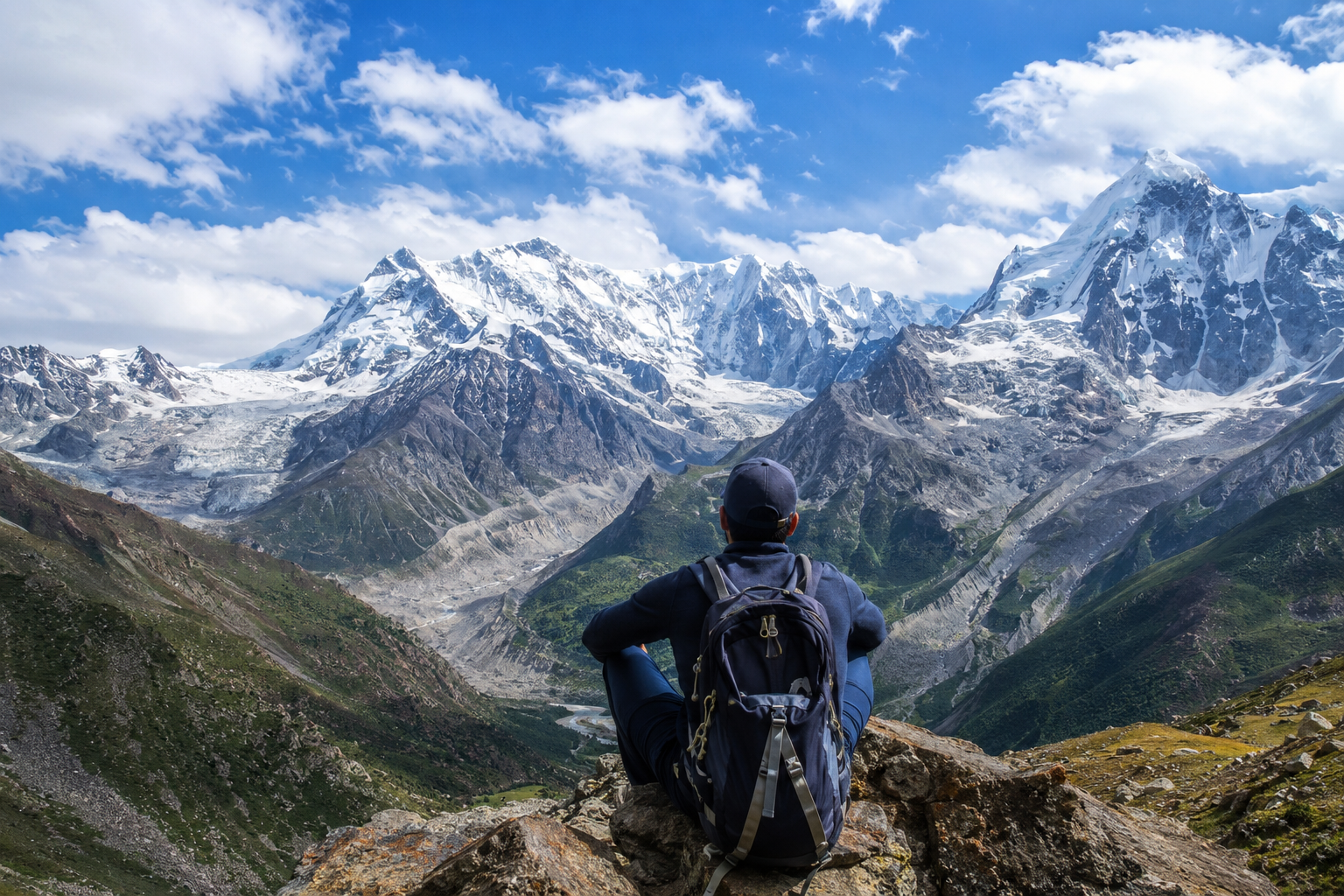
Top 100 Highest Mountain Peaks of Pakistan: Complete Guide to Pakistan's Majestic Summits
Pakistan is home to some of the world's most spectacular mountain landscapes. The country's northern regions bring together the mighty Karakoram, western Himalayas, and Hindu Kush, creating a remarkable landscape of high-altitude peaks, glaciers, alpine valleys, and remote mountain communities.
For mountaineers, trekkers, photographers, and adventure travelers, the mountain peaks of Pakistan offer extraordinary opportunities for exploration. Pakistan is home to five of the world's fourteen 8,000-meter peaks, including K2, the second-highest mountain on Earth.
From the legendary K2 and Nanga Parbat to the dramatic peaks of Hunza, Nagar, Skardu, Chitral, and the Karakoram, this guide explores the highest and most famous mountains in Pakistan, their mountain ranges, popular viewpoints, trekking destinations, and the best time to visit.
Why Pakistan Is Famous for Its Mountain Peaks
Pakistan is one of Asia's great mountain countries. Its northern and western regions contain thousands of named and unnamed summits spread across Gilgit-Baltistan, Khyber Pakhtunkhwa, and Azad Jammu and Kashmir.
The Karakoram Range contains an exceptional concentration of very high mountains, including K2, Broad Peak, Gasherbrum I, Gasherbrum II, Masherbrum, and numerous other major summits. The western Himalayas are dominated by Nanga Parbat, while the Hindu Kush rises dramatically around Chitral and northern Khyber Pakhtunkhwa.
These mountain systems are closely connected with some of the region's largest glaciers, rivers, forests, and high-altitude valleys. They are also home to diverse cultures and communities whose traditions have developed alongside the mountains for generations.
The Five Eight-Thousanders of Pakistan
Pakistan is home to five mountains higher than 8,000 meters. These legendary peaks are among the most challenging and prestigious mountaineering objectives in the world.
K2 - 8,611 m
K2 is the highest mountain in Pakistan and the second-highest mountain in the world after Mount Everest. Rising in the Karakoram near the Pakistan-China border, K2 is famous for its steep terrain, severe weather, technical climbing challenges, and demanding expedition conditions. It is widely known as the "Savage Mountain."
Nanga Parbat - 8,126 m
Nanga Parbat is the second-highest mountain in Pakistan and the ninth-highest mountain in the world. Located in the western Himalayas, it rises dramatically above the surrounding valleys. The mountain is particularly famous for views from Fairy Meadows and for its imposing climbing history.
Gasherbrum I - 8,080 m
Gasherbrum I, also known as Hidden Peak, is one of the major summits of the Karakoram. The mountain forms part of the spectacular Gasherbrum group and lies within the wider Baltoro region, one of the world's most famous high-altitude trekking and mountaineering areas.
Broad Peak - 8,051 m
Broad Peak is located close to K2 in the Karakoram. Its broad summit ridge gives the mountain its name, while its location near Concordia and the Baltoro Glacier makes it an important landmark on the K2 trekking and expedition route.
Gasherbrum II - 8,035 m
Gasherbrum II is another spectacular 8,000-meter peak in the Karakoram. Although it is often regarded as one of the more accessible 8,000-meter climbing objectives, it remains a serious high-altitude mountaineering challenge requiring extensive experience and preparation.
Most Famous Mountain Peaks in Pakistan
Pakistan's mountain landscape extends far beyond its five 8,000-meter peaks. Numerous summits are internationally recognized for their elevation, shape, climbing history, location, or spectacular scenery.
- Rakaposhi
- Masherbrum
- Ultar Sar
- Ladyfinger Peak
- Passu Sar
- Passu Peak
- Diran Peak
- Spantik, also known as Golden Peak
- Batura Sar
- Lupghar Sar
- Muztagh Tower
- Trango Towers
- Latok Peaks
- Baintha Brakk, also known as The Ogre
- Distaghil Sar
- Malubiting
- Tirich Mir
- Shispare
- Haramosh Peak
- Hunza Peak
Each mountain offers a different combination of scenery, trekking opportunities, technical climbing, photography, and cultural experiences.
Major Mountain Ranges in Pakistan
The highest mountains of Pakistan are concentrated within three major mountain systems: the Karakoram, the Himalayas, and the Hindu Kush.
Karakoram Range
The Karakoram is Pakistan's most famous high-mountain region and is home to K2, Broad Peak, the Gasherbrum group, Masherbrum, Trango Towers, and many other legendary summits.
The Baltoro Glacier, Concordia, Hunza, Nagar, and the upper Shigar and Shyok regions provide access to some of the most spectacular landscapes in the Karakoram.
Himalayan Range
The western Himalayas extend into northern Pakistan and include Nanga Parbat, one of the country's most recognizable mountains. The region also contains alpine meadows, forests, glaciers, and famous destinations such as Fairy Meadows and the Kaghan Valley.
Hindu Kush Range
The Hindu Kush dominates much of northern Khyber Pakhtunkhwa and the Chitral region. Its highest summit, Tirich Mir, rises above the surrounding valleys and is one of Pakistan's most important mountain landmarks.
Highest Mountain Peaks of Pakistan
Some of the most prominent high mountains associated with Pakistan include:
- K2
- Nanga Parbat
- Gasherbrum I
- Broad Peak
- Gasherbrum II
- Gasherbrum III
- Gasherbrum IV
- Distaghil Sar
- Kunyang Chhish
- Masherbrum
- Rakaposhi
- Batura Sar
- Saltoro Kangri
- Chogolisa
- Trivor
- Tirich Mir
- Ultar Sar
- Spantik
- Diran Peak
- Passu Sar
Together, these mountains demonstrate the extraordinary elevation, geological diversity, and scenic beauty of Pakistan's northern mountain regions.
Top 100 Mountain Peaks of Pakistan
There is no single universally accepted ranking of the "top 100" mountain peaks of Pakistan because different mountaineering and geographic sources may use different criteria, including elevation, prominence, location, climbing history, and whether a summit is considered an independent peak.
The following selection brings together many of the country's most significant and well-known summits across the Karakoram, Himalayas, and Hindu Kush:
K2, Nanga Parbat, Gasherbrum I, Broad Peak, Gasherbrum II, Gasherbrum III, Gasherbrum IV, Distaghil Sar, Kunyang Chhish, Masherbrum, Rakaposhi, Batura Sar, Chogolisa, Saltoro Kangri, Trivor, Tirich Mir, Ultar Sar, Spantik, Diran Peak, Passu Peak, Passu Sar, Shispare, Malubiting, Lupghar Sar, Momhil Sar, Trango Towers, Latok I, Latok II, Latok III, Baintha Brakk, Muztagh Tower, K6, K7, Ogre II, Rush Peak, Ladyfinger Peak, Golden Peak, Haramosh Peak, Dobani Peak, Manglik Sar, Pumari Chhish, Yukshin Gardan Sar, Kanjut Sar, Rimo Peak, Bublimotin, Hunza Peak, Shani Peak, Ghenta Sar, Shisper Peak, Bularung Sar, Drifika, Yazghil Sar, Bojohagur Duanasir, along with many other notable summits throughout Pakistan's high mountain regions.
This extraordinary collection of peaks makes Pakistan one of the world's most important destinations for high-altitude mountaineering, trekking, adventure travel, and mountain photography.
Best Mountain Destinations in Pakistan for Travelers
You do not need to climb an 8,000-meter mountain to experience the spectacular scenery of Pakistan. Several destinations provide remarkable views of major peaks and offer trekking, hiking, cultural experiences, photography, and adventure activities.
Hunza Valley
Hunza Valley is one of the best-known mountain destinations in Pakistan. Travelers can enjoy views of Rakaposhi, Ultar Sar, Ladyfinger Peak, Passu Sar, and the distinctive Passu mountain landscape while exploring historic villages, forts, valleys, and mountain roads.
Skardu
Skardu is one of the principal gateways to the high Karakoram. It provides access to major trekking and expedition routes toward K2, Concordia, the Baltoro Glacier, Broad Peak, and the Gasherbrum region.
Fairy Meadows
Fairy Meadows is famous for its panoramic views of Nanga Parbat. The meadow is a popular destination for travelers and trekkers seeking one of Pakistan's most impressive mountain viewpoints.
Nagar Valley
Nagar Valley lies opposite Hunza and offers spectacular views of Rakaposhi, Golden Peak, and surrounding Karakoram mountains. The valley is an excellent destination for trekking, photography, cultural exploration, and scenic travel.
Chitral
Chitral is surrounded by the Hindu Kush and provides access to some of northern Pakistan's most distinctive mountain landscapes. The region is particularly associated with Tirich Mir and offers a combination of mountain scenery and rich cultural heritage.
Best Time to Visit the Mountains of Pakistan
The ideal time to visit Pakistan's mountain regions depends on your destination and planned activities.
Spring
Spring brings pleasant conditions to many lower valleys, along with blooming orchards and colorful landscapes. It is particularly attractive for scenic road trips and photography.
Summer
Summer is generally the main season for trekking, high-altitude travel, mountaineering expeditions, and access to many northern mountain destinations. Weather and road conditions can still vary considerably at high elevations.
Autumn
Autumn offers clear mountain views, cooler temperatures, and spectacular colors in many valleys. It is an excellent season for photography and scenic travel.
Winter
Winter brings heavy snow and dramatic landscapes to many mountain areas. However, snowfall can restrict access to high-altitude roads and trekking routes, so travelers should check current local conditions before planning a journey.
Responsible Mountain Tourism in Pakistan
Pakistan's mountain ecosystems are fragile and require responsible tourism. Visitors should avoid littering, minimize environmental impact, respect local traditions and communities, and follow established trekking and conservation guidelines.
Supporting local guides, drivers, accommodation providers, porters, and small businesses can also help ensure that tourism contributes directly to mountain communities.
Explore Pakistan's Mountains with Adventure Touristik
Adventure Touristik offers guided trekking, mountain tours, cultural journeys, and customized travel experiences across Pakistan. From the legendary K2 region and Baltoro Glacier to Hunza, Fairy Meadows, Nanga Parbat, Rakaposhi, and the Hindu Kush, our tours are designed for travelers who want to experience Pakistan's spectacular mountain landscapes.
Whether you are interested in a challenging trekking adventure, a scenic mountain tour, a cultural journey, or professional expedition support, Pakistan offers an extraordinary range of experiences.
The mountains of Pakistan are more than towering summits. They are landscapes shaped by glaciers, rivers, ancient cultures, and generations of mountain communities. Every peak has its own character, and every valley offers a new opportunity for exploration.
Frequently Asked Questions About Pakistan's Mountain Peaks
What is the highest mountain in Pakistan?
K2, at 8,611 meters (28,251 feet), is the highest mountain in Pakistan and the second-highest mountain in the world.
How many mountains over 8,000 meters are in Pakistan?
Pakistan is home to five mountains higher than 8,000 meters: K2, Nanga Parbat, Gasherbrum I, Broad Peak, and Gasherbrum II.
Which mountain range has the highest peaks in Pakistan?
The Karakoram Range contains the greatest concentration of Pakistan's highest mountains, including K2, Broad Peak, Gasherbrum I, Gasherbrum II, and many other major summits.
Can beginners visit Pakistan's famous mountains?
Yes. Travelers do not need technical climbing experience to visit many famous mountain destinations. Hunza Valley, Fairy Meadows, Skardu, Passu, and other northern areas offer spectacular mountain scenery through sightseeing, hiking, and non-technical trekking.
Which mountain is called the Savage Mountain?
K2 is widely known as the "Savage Mountain" because of its demanding terrain, severe weather, and technical climbing challenges.
Where can I see K2 without climbing it?
Travelers can experience the K2 region through trekking routes leading toward Concordia and K2 Base Camp. These are demanding high-altitude treks and require proper preparation, local support, and appropriate acclimatization.
Related Mountain Guides and Tours
If you want to explore more of Pakistan's mountain ranges, trekking routes, and adventure destinations, continue with these guides and tours from Adventure Touristik:
- Mountains of Pakistan: The Complete Guide to the Himalayas, Karakoram and Hindu Kush
- The Three Great Mountain Ranges in Pakistan
- The Himalayas of Pakistan
- K2 Base Camp Trek Guide
- Fairy Meadows and Nanga Parbat Travel Guide
- Baltoro Glacier Trek Guide
- Rakaposhi Base Camp Trek
- Hunza Valley Travel Guide